
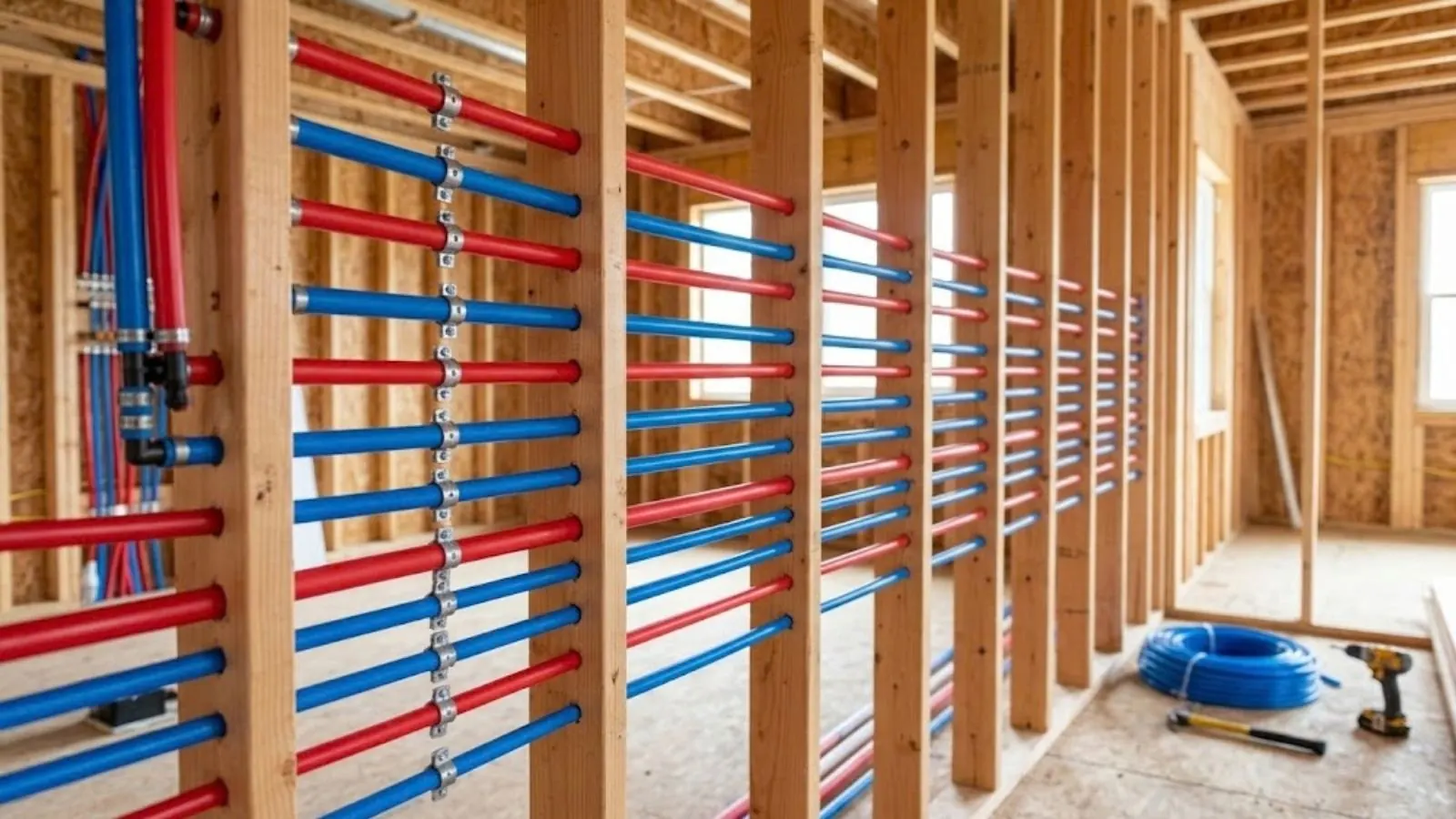
Repair a section or repipe the house?
Most homeowners call about one symptom and want to know whether a patch will hold. The honest answer depends on how much pipe is failing and how much of the house it serves. This table is the framework we use on a first inspection.
| What we find | Leans toward | Why |
|---|---|---|
| One leak in otherwise clean, flexible pipe | Spot repair | The pipe is sound, so replacing only the failed piece is enough |
| Second or third pinhole in the same copper run | Replace that run | A pattern means the wall of the pipe is thinning along its length |
| Galvanized lines with rusty water and weak flow | Repipe | Scale builds inside and narrows the opening, so patching rarely restores flow |
| Old polybutylene-era plastic with failed fittings | Repipe | The material and connections are the concern, not one leak |
| Leaks in several unrelated rooms | Repipe | Wide failure means more repairs ahead, each one opening a wall |
If your home still has galvanized pipe or old polybutylene-era piping, you may be a candidate, and we confirm by inspection rather than from the age of the house. We do not state a home's piping from its neighborhood.
Signs your supply pipes are wearing out
Brown or orange water
Rust-colored flow after the tap has sat unused points to corroding steel.
Pressure that fades
Flow drops when two fixtures run at once, or an entire bathroom runs weak.
Repeat pinholes
Small spray leaks that reappear in different spots along copper pipe.
Stains and damp patches
Spots on walls or ceilings with no roof or fixture explanation.
Metallic taste or smell
Taste changes can come from the pipe, though the water supply can also be the cause.
Before recommending a repipe, we rule out cheaper causes. A single clogged aerator, a partly closed valve or a leak along the buried line can mimic worn supply piping. Our leak detection service separates a failing line from a hidden leak, and a hidden leak may need only a targeted repair.
Riverton water and the pipes inside your walls
Riverton's 2022 water quality report lists average hardness of about 190 mg/L, around 11 grains per gallon. Water with more dissolved minerals tends to leave scale in fittings and water heaters, so ask the Riverton water division for its latest annual report and test your own tap.
Scale is not the same as pipe corrosion, and we do not blame the water for every leak. When we cut out a section, we look at the inside wall. That shows if the cause is scale, rust or just a bad joint.
The city owns the water line through the meter, and you own the pipe from there to the home. A repipe covers your side, from the house shutoff inward. If the buried run from the meter is also failing, water line repair is a separate scope we price clearly.
PEX or copper: how the choice works
PEX tubing
- Flexible, so it snakes through walls with fewer openings
- Fewer fittings means fewer places to leak
- Quieter against framing when properly supported
- Needs protection from sunlight and stays out of certain spaces
Copper
- A long track record in homes
- Rigid and strong, with soldered or pressed joints
- More labor to install and often more wall access
- Hard water and scale can still affect it over time
Both can last decades when installed well. We explain which material fits your walls, your budget and your tolerance for drywall repair. A mixed approach is common, such as copper stubs at fixtures and PEX through the framing.
Want a pipe inspection before deciding?
Call and describe what you see. We will talk through whether a section or the whole home makes sense and set up a visit.
What happens during a repipe
Inspection and plan
We trace the existing lines, test pressure and flow, and decide where new pipe will run.
Permit check
Riverton says a building permit is required for work on plumbing systems regulated by the code. Ask the Riverton building department what your job needs, and we handle what is needed.
Water off, access made
Water is shut off for the house. We cut small openings in drywall at strategic spots instead of opening whole rooms.
Run and connect new lines
New supply lines go in to each fixture, tied to the water heater and shutoffs.
Pressure test and restore flow
We pressure test before closing walls, then turn water back on and check every fixture.
Patch and cleanup
We patch the access holes to a paint-ready state. Painting and texture matching are separate.
How many days it takes depends on the size of the home and how much of the piping we replace. Water is off for part of that time, so plan for showers, laundry and cooking. We give a schedule once we have seen the house and do not promise a fixed number of days up front.
What a repipe costs
Home size and fixture count
More bathrooms, kitchens and hose bibs mean more runs to replace.
Material choice
PEX and copper differ in materials and labor.
Wall and ceiling access
Finished drywall, tile or a slab changes how the pipe reaches each fixture.
Patching and finish
Access holes are patched, while paint, texture and tile matching may be a separate scope.
Permits and extras
Permits, new shutoffs and updating the water heater connections add to the total.
Homeowners policies often cover sudden burst-pipe damage but usually not wear, corrosion or slow leaks, so a planned repipe is normally paid by the owner. Call us for a real number, and we will state a clear price before work starts.
Rules and sources behind this page
Whole-home piping replacement is governed by the plumbing code Utah adopts. Utah Code 15A-2-103 adopts the 2024 International Plumbing Code (IPC) as the state plumbing code, effective July 1, 2026, with Utah amendments on top. Riverton's building office says a permit is required for work on plumbing systems the code regulates, which is the office to ask about a repipe.
Verify the plumber's class, Journeyman, Residential Journeyman, Master or Residential Master, through the state's license lookup before you sign anything.
Repiping questions homeowners ask
Look for rust-colored water, falling pressure and repeated pinholes. A plumber should inspect the lines and test flow before recommending a repipe, because a single leak is often just a repair.
Often, yes. Galvanized steel corrodes inside and narrows over time, so flow and water color decline. We confirm by inspection and by looking at the cut pipe, not by guessing from the age of the house.
It depends on the home's size and how much pipe is replaced. After inspecting the home we describe the schedule, and we keep the water-off window as short as the job allows. We do not promise a fixed number of days up front.
We use small, strategic openings and flexible tubing where it fits, so whole-wall demolition is uncommon. Some access holes are always needed, and we patch them ready for paint.
Both work when installed well. PEX is flexible with fewer joints, while copper is rigid and familiar. We recommend the one that fits your home and explain the trade-offs.
The city says a building permit is required for work on plumbing systems regulated by the code. Rules vary by job, so ask the Riverton building department about yours.
Yes. If one bathroom or one run is failing and the rest is healthy, replacing just that section is reasonable. A burst pipe repair may be enough for a single break.
Yes. We are based in Riverton and also dispatch to nearby cities like Draper. Call and tell us the address.