
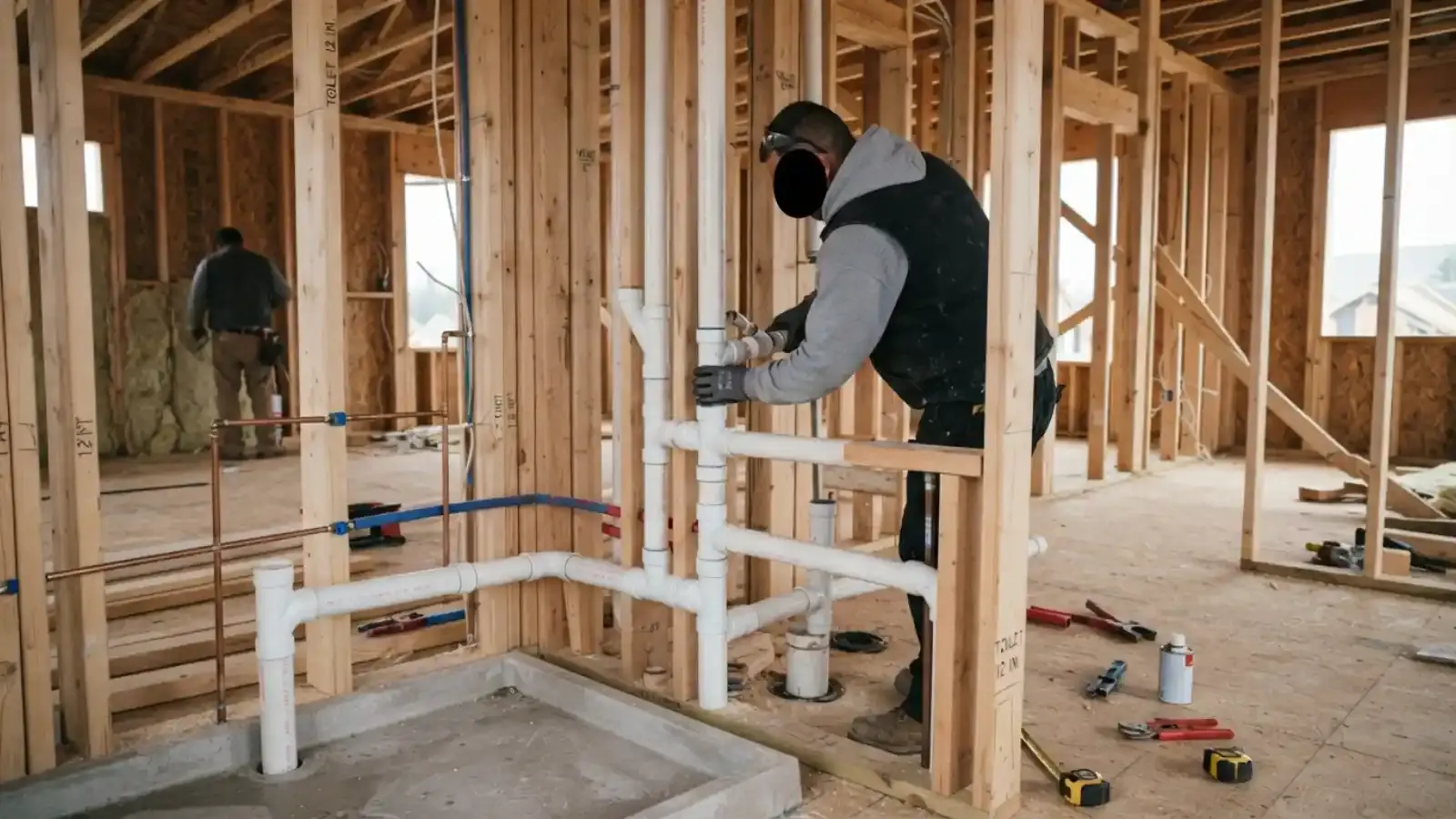
What we install
- Fixtures:sinks, toilets, tubs, showers, utility sinks, hose bibs and the shutoff valves behind them.
- Water supply lines:new runs to a bathroom, kitchen island, laundry or accessory space, usually in PEX or copper.
- Drain and vent lines:slope, venting and cleanouts matter as much as the supply. A bad drain layout causes slow drains for years.
- Appliance connections:dishwasher, ice maker, washer boxes and garbage disposals tied into supply and drain.
- Gas lines:new or extended gas piping to ranges, dryers, fire features and heaters, done only by licensed plumbers.
Anything that moves a wall, a sink or a toilet starts as a layout question. We explain what the framing and floor will allow before you buy fixtures, so you do not pick a vanity that fights the drain.
Rough-in for a remodel: how the plan comes together
Walk the space
We look at the existing supply, drain and vent locations and see what stays and what moves.
Pick fixtures first
Fixture spec sheets set the connection points, so choose them before the walls close.
Route and mark
We lay out supply and drain runs, plan venting and note where framing or joists need attention.
Rough-in and test
We install lines, then pressure test supply and water test drains while everything is still open.
Inspection, then close up
If the job needs an inspection, it happens before drywall covers the pipes.
Set fixtures and final check
We install fixtures, test every connection and run each one to check for leaks and slow drains.
Island sinks and bathrooms moved to a new wall are the usual trouble spots. They need venting planned in advance, and slab floors limit where new drains can run. We would rather tell you that during the walk-through than after the drywall is up.
Gas line installation and inspection: safety first
If you smell gas, leave the building right away and call Enbridge Gas Utah at 1-800-767-1689 or 911 from a safe place. Do this before you call a plumber. Do not flip switches, use phones inside, or try to find the leak yourself.
Gas piping is not a do-it-yourself project. New lines to a range, dryer or outdoor appliance need correct sizing, secure connections and a leak test before the appliance is lit. We also inspect existing gas connections when you are adding an appliance or you are unsure about an older setup. Natural gas has a sulfur or rotten-egg odorant, and carbon monoxide alarms do not detect it.
Planning a project?
Call and tell us what you want to add or move. We will schedule a walk-through and explain what the job involves.
Permits and the plumbing code in Riverton
Riverton's city site says a building permit is required to construct, alter or repair, and for work on electrical, gas, mechanical or plumbing systems regulated by the code. Applications go through the city's building inspections office. It does not say what each small job needs, so ask what yours requires before we start.
Utah Code 15A-2-103 adopts the 2024 International Plumbing Code effective July 1, 2026, with Utah amendments. Those rules shape venting, fixture connections and inspections. You can confirm that any plumber you hire is licensed with the Utah Division of Professional Licensing license lookup at secure.utah.gov/llv/search/index.html, profession PLUMBER.
New construction and additions
In a new build or addition, plumbing happens in stages: underground rough-in before the slab or foundation, in-wall rough-in at framing, and trim-out when fixtures go in. Each stage has its own inspection, and each depends on the one before it.
The city owns the water line through the meter. Your builder's plumbing connects from the meter to the home, so we coordinate where the service enters the house. Before digging for a new service or sewer lateral, someone must call Blue Stakes at 811.
Sewer for Riverton homes is provided by Jordan Basin Improvement District, which maintains the main, while the private lateral from the home to the main belongs to the owner. We plan drains with that handoff in mind.
Which installation jobs need the most planning
| Job | Decide before we start | What can complicate it |
|---|---|---|
| Replace a toilet or faucet | Fixture choice and shutoff condition | Old or stuck shutoff valves |
| Add a bathroom | Location of the nearest drain and vent | Slab floors, long drain runs, joist direction |
| Kitchen remodel or island | Sink, disposal and dishwasher positions | Island venting and cabinet layout changes |
| Laundry room move | Box location and drain size | Distance to stack, floor type |
| Gas line to a range or dryer | Appliance load and pipe path | Old gas piping, long runs, permit requirements |
What an installation costs
Distance to existing lines
Short tie-ins are simpler than long new supply and drain runs.
Access
Open framing is faster than finished walls, a slab or a tight attic.
Venting and drain slope
Some layouts need extra vent pipe or a rerouted drain to work properly.
Material and fixtures
PEX, copper, PVC and the fixtures you pick each carry their own cost.
Permit and inspection
Permit needs and inspection timing shape the schedule and the total.
Planned installations are normally an owner expense, though sudden damage from a failed line may fall under homeowners coverage, so check your policy. Call us for a real number, and we state a clear price before work starts.
Rules and sources behind this page
New plumbing is built to the plumbing code Utah adopts. Utah Code 15A-2-103 adopts the 2024 International Plumbing Code (IPC) as the state plumbing code, effective July 1, 2026, with Utah amendments on top. Riverton's building office says a permit is required for work on plumbing systems the code regulates, so ask the office what your project needs before work starts.
Gas connections add another layer. For any gas smell, the standard is simple: leave the building and call Enbridge Gas Utah at 1-800-767-1689 or 911 before calling a plumber.
Plumbing installation FAQs
The city says a building permit is required for work on plumbing systems regulated by the code, and applications go through the building inspections office. What your specific job needs is a question for the Riverton building department. We help you with the process.
No. Gas work needs licensed plumbers, correct sizing and a leak test. If you smell gas, leave and call Enbridge Gas Utah at 1-800-767-1689 or 911 before you call anyone else.
Often, yes. The limits are the drain slope, vent path and floor type. We check them in the walk-through and tell you whether moving it is simple or a larger project.
Both are used in homes. PEX is flexible with fewer joints and copper is rigid and familiar. We pick the one that fits your walls and explain why. Our repiping page compares them in more detail.
Yes. We coordinate rough-in timing and inspections with your contractor so lines are tested before walls close. We are based in Riverton and also serve South Jordan.
Use the Utah Division of Professional Licensing license lookup at secure.utah.gov/llv/search/index.html. Search by name or license number, profession PLUMBER. Classes include Apprentice, Journeyman, Residential Journeyman, Master and Residential Master.
It can reveal them. A new run adds demand, so we check flow before adding fixtures. If the existing lines are worn, a water line repair or repipe may belong in the plan.