
Signs that point to a sewer leak, not just a clog
A clog stops water. A leak lets sewage escape into the soil, and the soil tells on it. Most people notice the yard or the air before they notice anything inside the house.
Watch for several clues at once. One odd patch of grass means little, but a patch plus a smell plus a slow drain is a pattern worth checking.
A sunken or soggy strip of lawn
Sewage that escapes from a cracked or separated joint softens the soil. A shallow dip or a patch that stays wet on dry days, in a line running from the house toward the street, is a classic clue.
One strip of grass that is greener
Waste water feeds the roots above it. A narrow band of lush growth over a pipe route, while the rest of the lawn is ordinary, often marks a slow leak.
Sewer odor outside, near the foundation
A rotten-egg or musty smell that is stronger outdoors than indoors suggests the pipe is open to the ground somewhere. Indoor smells alone more often point to a dry trap or a vent problem.
Gurgling or slow drains in several fixtures
When a toilet burps as the washer drains, air is being pushed through a restricted or damaged line. Slow drains in more than one room point past a single fixture.
Repeat clogs that clear and return
A cable machine can punch through a blockage, but if roots or a sagging section keep catching paper, the clog comes back within weeks. Repeat trouble means the pipe itself needs a look.
Pests are another sign people overlook. Rodents and insects can travel along a broken sewer line, so a sudden increase in basement or yard activity near the pipe route deserves a second thought.
Run the cleanout check before you call anyone
Most homes have a sewer cleanout, a capped pipe that gives direct access to the line between the house and the street. It is often in a yard, along an exterior wall, in a garage, or in a basement or crawlspace. It takes five minutes to read, and the result tells you whether the problem sits inside your walls or out in the pipe.
Find the cleanout cap
Look for a round or square threaded cap set into the ground or on a pipe near the foundation. Clear leaves or dirt away so you can see it.
Put on gloves and keep your face back
Stand to the side. Loosen the cap slowly with a wrench, because pressure or standing sewage can come out fast.
Look into the opening
Use a flashlight. Standing water or sewage in the cleanout suggests a blockage or break somewhere between the house and the main. A dry cleanout points to a problem in the plumbing inside the house.
Do not run water to test it
Skip the running faucets and flushing while the cap is off. Water has nowhere safe to go if the line is blocked.
Recap and write down what you saw
Tighten the cap by hand and then snug it with the wrench. Note whether water was standing, how high it was, and any smell. That note helps the camera visit start in the right place.
If sewage is already coming up in a tub, shower or floor drain, stop. Keep people and pets out of the area and do not run any water. Call the 24/7 line, because that is no longer a leak to watch.
What Riverton homeowners should know
Jordan Basin Improvement District (JBID), the sewer provider that was formerly South Valley Sewer District until its June 2024 renaming, maintains the sewer main. The private line from your house to that main is your responsibility, and the district says it is only responsible for its main line, not your service line. That split decides who calls whom: a problem in the lateral is yours to fix.
JBID gives a simple test. Open your cleanout, and if you see standing water, the blockage is likely between the house and the main, so call the district at (801) 571-1166. If the cleanout is dry, the trouble is probably in your house plumbing. JBID also notes that clay pipes from before the 1980s are prone to roots, and that standard homeowners policies often exclude sewer backup, so check your own policy.
Sources: Jordan Basin Improvement District (JBID) sewer pages, including its history and sewer service guidance
Not sure whether it is a leak or a clog?
Describe what you see in the yard and at the drains when you call the 24/7 line. We will tell you whether a camera inspection makes sense first.
How a leak in a buried sewer line actually gets found
We do not guess where a buried pipe is damaged, and we do not start digging on a hunch. Three steps turn a symptom into a location, and each one answers a different question.
Step one: a camera run through the line
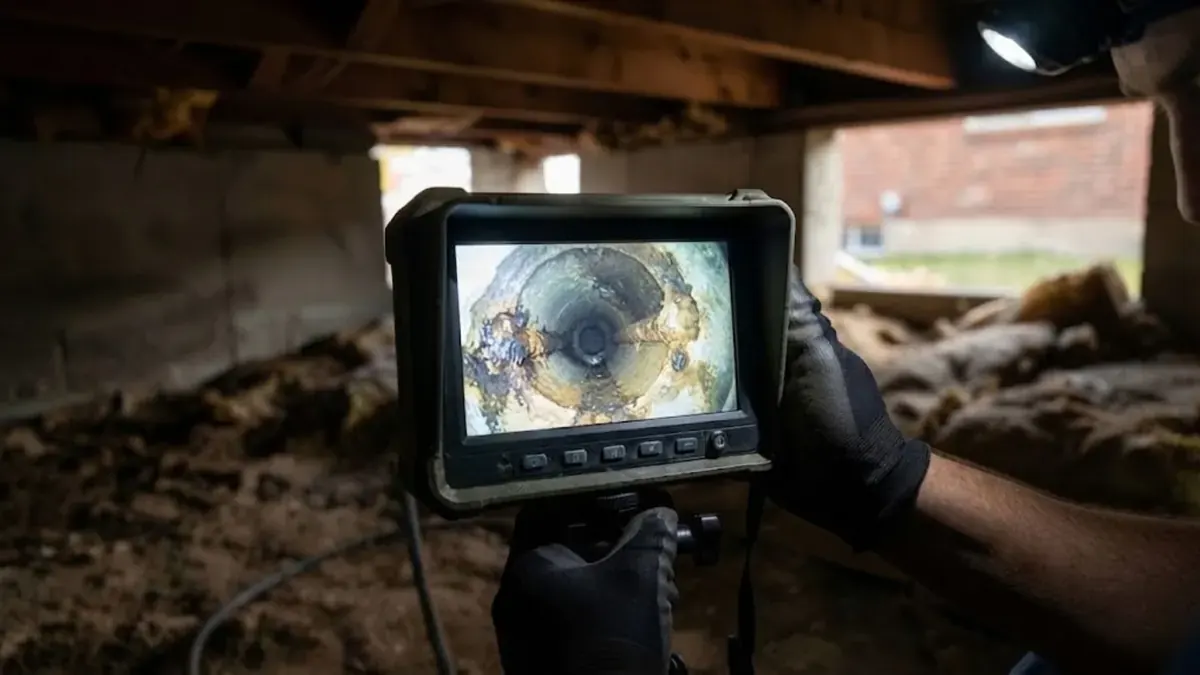
A waterproof camera head on a flexible rod goes in through the cleanout and travels toward the main. On the monitor we look for cracks, offset joints where two pipe sections no longer line up, roots pushing through seams, and low spots that hold water. A pipe that holds a pool of water along its bottom is called a belly, and bellies collect paper and waste.
Step two: locating the damage from above ground
The camera head carries a small transmitter, called a sonde. A handheld receiver walks the yard and reads the signal, which marks the pipe's path and its depth at the moment the camera shows a defect. That marker is what lets a repair crew open a small area instead of a long trench.
Step three: confirming when the picture is unclear
Sometimes the video leaves a question, such as a hairline crack in an old cast iron or clay section. A dye or water test can show whether liquid is actually leaving the pipe. We would rather confirm a doubtful finding than recommend a repair on a maybe.
We also clear the line before filming when a heavy blockage hides the pipe wall. A cable machine or a sewer line cleaning pass gives the camera a clear view, and the footage then shows the pipe's true condition instead of a wall of debris.
What your symptom most likely means
| What you notice | Probable location | First move |
|---|---|---|
| Standing water in the cleanout | Blockage or break between the house and the main | Stop using water and arrange a camera inspection |
| Dry cleanout, one slow drain | A single fixture's drain or trap inside the house | Try a plunger or have a drain cleaned |
| Gurgling toilets and slow drains in every room | Main house drain or the lateral | Check the cleanout, then book a camera run |
| Green, sunken strip of lawn above the pipe route | Leak or separated joint in the buried line | Camera and locator visit before any digging |
| Sewer smell only outdoors | Open joint, damaged cleanout cap or cracked pipe | Inspect the cap and film the line |
| Sewage coming up in floor drain or tub | Full blockage in the lateral or main | Keep everyone out, run no water, call right away |
Repair choices once the leak has a location
The camera footage decides the repair, and the honest answer depends on what the pipe looks like for its whole length, not just at the break. A single bad joint in an otherwise sound line is a different job from a pipe with cracks every few feet.
If the damage is local, a point repair removes that section and replaces it. If the pipe is failing along its length, sewer line repair may mean lining or replacing a longer run. Either way, call 811 before digging so buried utilities get marked.
Points toward a spot repair
- One cracked or offset joint with the rest of the pipe looking sound
- A single root intrusion that has been cut back and the pipe wall is intact
- A defect that sits shallow or in an easy-to-reach area
- A line that has only started to show symptoms
Points toward a longer repair or replacement
- Cracks, offsets or roots in several sections on the video
- A belly or sag that keeps holding waste
- Old pipe that is crumbling or collapsing at the walls
- Repeated blockages even after repeated cleaning
A good inspection ends with a recording and a clear statement of what was seen. Ask to see the footage, and ask the plumber to point to the defect on the monitor before agreeing to any work.
Why a camera run belongs on a pre-purchase checklist
A standard walkthrough cannot see inside a buried sewer lateral. If you are buying a house, a camera inspection before closing shows root damage, bellies and cracks while you can still negotiate. Finding the same defect after closing leaves the repair with you.
Neighbors in South Jordan and Bluffdale buy homes in the same sewer district as Riverton, and the same sequence applies to them: camera first, decision second.
Questions about sewer line leaks
Look for a sunken or unusually green strip of lawn along the pipe route, a sewer smell outdoors, and drains that gurgle or back up in several rooms. None of these proves a leak alone. Together they justify a camera inspection.
A cleanout check helps narrow the location, and a camera and locator confirm it.
Yes. A small crack or separated joint can leak sewage into the soil while the pipe still carries most of the flow. That is why yard and odor clues matter. By the time a backup happens, the damage is often well along.
It shows the inside of the pipe on a live monitor: cracks, offset joints, roots, bellies, buildup and collapsed sections. The locator marks the surface position and depth of anything we find. Ask for the recording so you have a record of the pipe's condition.
It is safe if you stay to the side, wear gloves, and open the cap slowly. If you see sewage standing high, stop, recap and call. Never run water while the cap is off, and keep children and pets away from the area.
The private line from the house to the main belongs to the homeowner, according to JBID. The district maintains the main. If you are unsure which side a problem is on, the cleanout check and a camera run answer that quickly.
Yes, if the home has an older sewer lateral or mature trees near the line. A camera run shows roots and cracks that a walkthrough cannot. We work in Riverton and the nearby towns, including Bluffdale, and can arrange it quickly when a closing deadline is tight.
Keep people and pets out of the area, run no water, and do not use the toilets. Call the 24/7 line. If anyone feels ill, treat it as a health matter first.