What epoxy lining does inside a sewer pipe
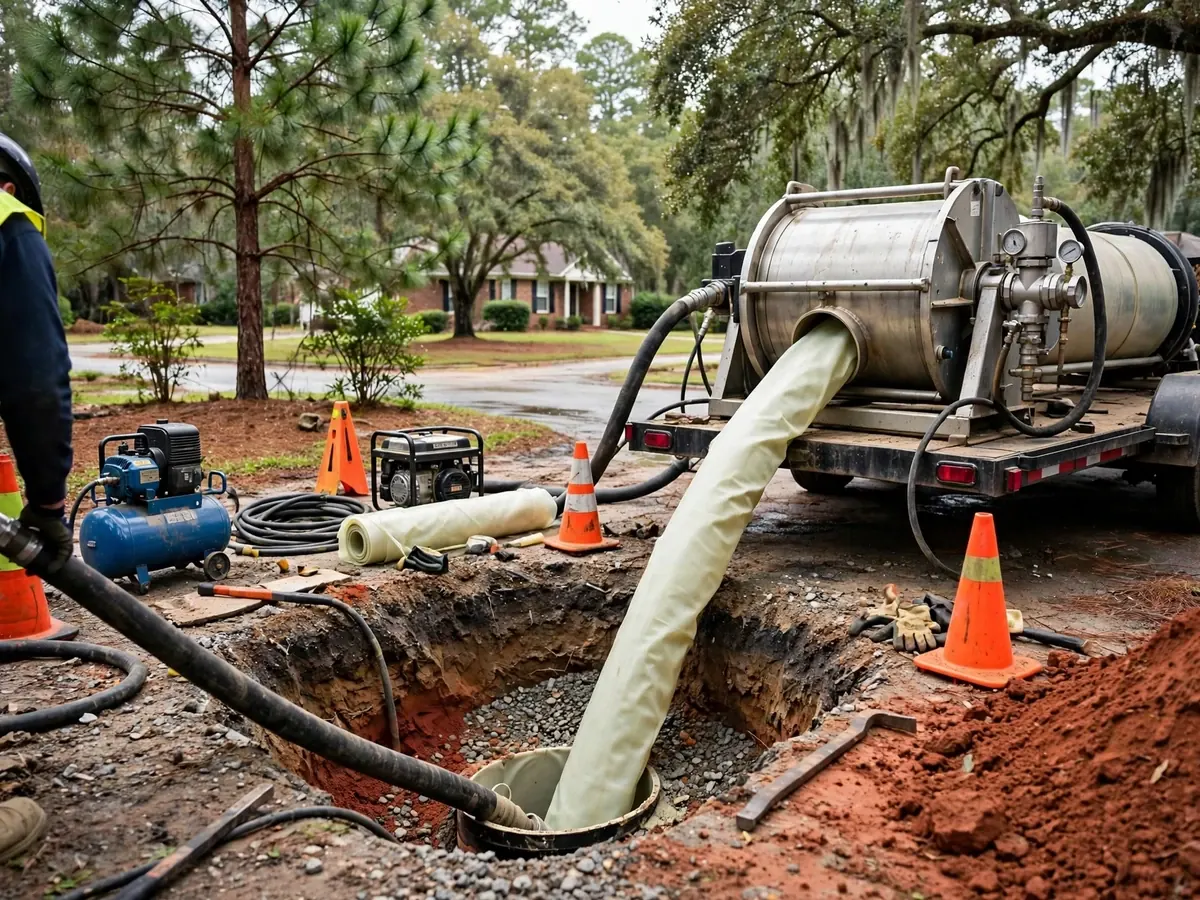
A crew cleans the pipe, inspects it on camera, then pulls a resin-soaked tube through the damaged section. The tube is inflated against the pipe wall and cured until it hardens. Side connections are reopened afterward with a cutting tool.
The result is a smooth pipe inside the old one. Lining seals small cracks, open joints and root entry points. It does not straighten a sagging pipe, and it does not make a collapsed section whole again.
That last point drives the whole price conversation. Cost depends less on the resin than on what condition the pipe is in before anyone starts.
What drives the cost of lining a sewer line
Length of the run
More feet of liner means more material, more curing time and more labor. A short spot liner and a full run to the main are priced very differently.
Pipe diameter and material
Larger pipes need larger liners. Clay, cast iron, cement and plastic each accept the resin differently and may need different prep.
Cleaning before lining
Roots, grease, scale and debris must be removed first, often with hydro jetting or a cable machine. Heavy buildup adds prep time.
Access points
A good cleanout makes the job simple. If there is no usable cleanout, a crew may have to create an access point, which adds work.
Camera and locating
A recorded camera inspection and a locate of the pipe path are part of doing this right and are often priced into the job.
Restoration and reinstatement
Reopening side connections, final camera checks and any cleanup add to the total.
Standard homeowner policies often exclude sewer backup, and slow wear in an old pipe is usually not treated like a sudden burst, so check your policy before you count on coverage. For a real number on your lateral, call us and we will price it after we see the camera footage.
When lining works and when it does not
| Condition on camera | Lining a good fit? | What we would likely recommend |
|---|---|---|
| Hairline cracks, small root intrusions, open joints | Yes | Clean thoroughly, then line the damaged run |
| Pipe is round and continuous but rough or scaled | Often | Clean, camera again, then decide on a liner |
| Belly where water pools, pipe sags | Usually no | Lining follows the sag, so the pool stays. Dig and re-slope |
| Offset joint or sections pulled apart | Depends on the gap | Spot repair by excavation, then line the rest if useful |
| Collapsed or crushed section | No | Excavate and replace that section |
Ask what the liner is expected to do for your pipe, not only what it costs. A liner restores the inner surface and seals leaks, but it adds no strength to soil that is moving and no slope to a pipe that lost it years ago.
Where the pipe is worth saving, lining can save a yard, a driveway and a garden bed. Where it is not, lining wastes money, and an honest installer will say so.
What Riverton homeowners should know
Jordan Basin Improvement District maintains the sewer main, while the private line from your home to the main is your responsibility. That means a lining job on your lateral is normally a homeowner cost, not a district repair. Calling the district at (801) 571-1166 is still the right move if a cleanout shows standing water and you are not sure where the blockage sits.
The district also notes that clay pipes from before the 1980s are prone to roots. If your home is old enough that the lateral could be clay, a camera inspection is the best first step, because root intrusion at joints is exactly what lining can address when the pipe is otherwise intact. Standard homeowner policies often exclude sewer backup, so check yours.
Sources: Jordan Basin Improvement District customer information page on sewer lines and responsibility
Get the camera footage first
Call the 24/7 line and we will inspect the line on camera, show you what is inside and tell you whether lining is realistic.
A four-step way to decide between lining and digging
Clear the line and camera it
Nothing else makes sense until the inside of the pipe is visible. A sewer camera inspection records cracks, roots, offsets, bellies and the exact distance to each defect.
Locate the pipe and the problem
A locator on the surface marks the path and depth. That tells you how much yard, driveway or concrete a dig would cross.
Compare the repair paths
Ask for the lining option and the excavation option on the same defect list, so the quotes are comparable. A sewer line repair page can show what spot repairs and full replacement involve.
Weigh disruption against condition
If the pipe qualifies, lining usually disturbs less ground. If it does not, a clean dig and replacement is more honest than forcing a liner in.
Lining versus excavation, side by side
Epoxy lining
- Smaller entry points, less trench.
- Works well for cracks, joints and root entry.
- Requires a pipe that is continuous and mostly round.
- Cannot fix a bellied or collapsed run.
Dig and replace
- Opens the ground along the repair length.
- Fixes belly, offset and collapse directly.
- Needs Blue Stakes 811 locates before digging.
- Replaces the section with new pipe.
Before any excavation, call 811 or file a request with Blue Stakes of Utah. Online requests are accepted around the clock, and the notice period counts business days, so build that into your schedule.
Questions to ask any company that offers lining
- Will you show me the camera footage?The video should come before the quote, not after it.
- What is the diagnosis for the whole line?Ask how you know the rest of the pipe is sound beyond the lined section.
- How will you handle roots and buildup?Cleaning before lining decides how well the liner bonds.
- What if the liner will not fit?A clear fallback plan beats a surprise change order.
- Is the work on my side of the line?You pay for the lateral, so confirm the work stays on private pipe.
If roots keep returning, the line may need cleaning on a schedule, with lining added only where the pipe warrants it. We take these calls from Herriman and Draper as well as Riverton. Lining does not remove the need to keep grease and flushed items out of the line.
Epoxy sewer pipe lining questions
We do not quote figures without seeing the pipe, because length, diameter, prep and access change the answer. After a camera inspection we give a clear price before work starts.
Sometimes, but not always. Lining often avoids restoration costs for yards and hardscape, while a long or heavily damaged run may favor replacement. The camera findings decide.
No. A pipe that is collapsed, badly offset or sagging with a belly is a poor candidate. Lining follows the shape of the old pipe, so it keeps defects it cannot straighten.
It seals the openings roots use to enter. Roots can still grow against the outside of the liner, so keeping the line maintained matters. We do not promise permanent results.
The district maintains the main, and you are responsible for the private line from your home to the main. A sewer inspection shows which side of the connection a problem sits on.
Yes. Grease, flushed products and debris can still collect in a lined pipe. Regular maintenance and keeping cooking grease out of drains help every sewer line, lined or not.