
Clearing a clog and repairing a pipe are not the same bill
A clog is a blockage. The pipe may be fine, and a cable machine or a jetter restores the flow. A repair means the pipe itself is cracked, separated, sagging, crushed or invaded by roots, and something has to be replaced or relined.
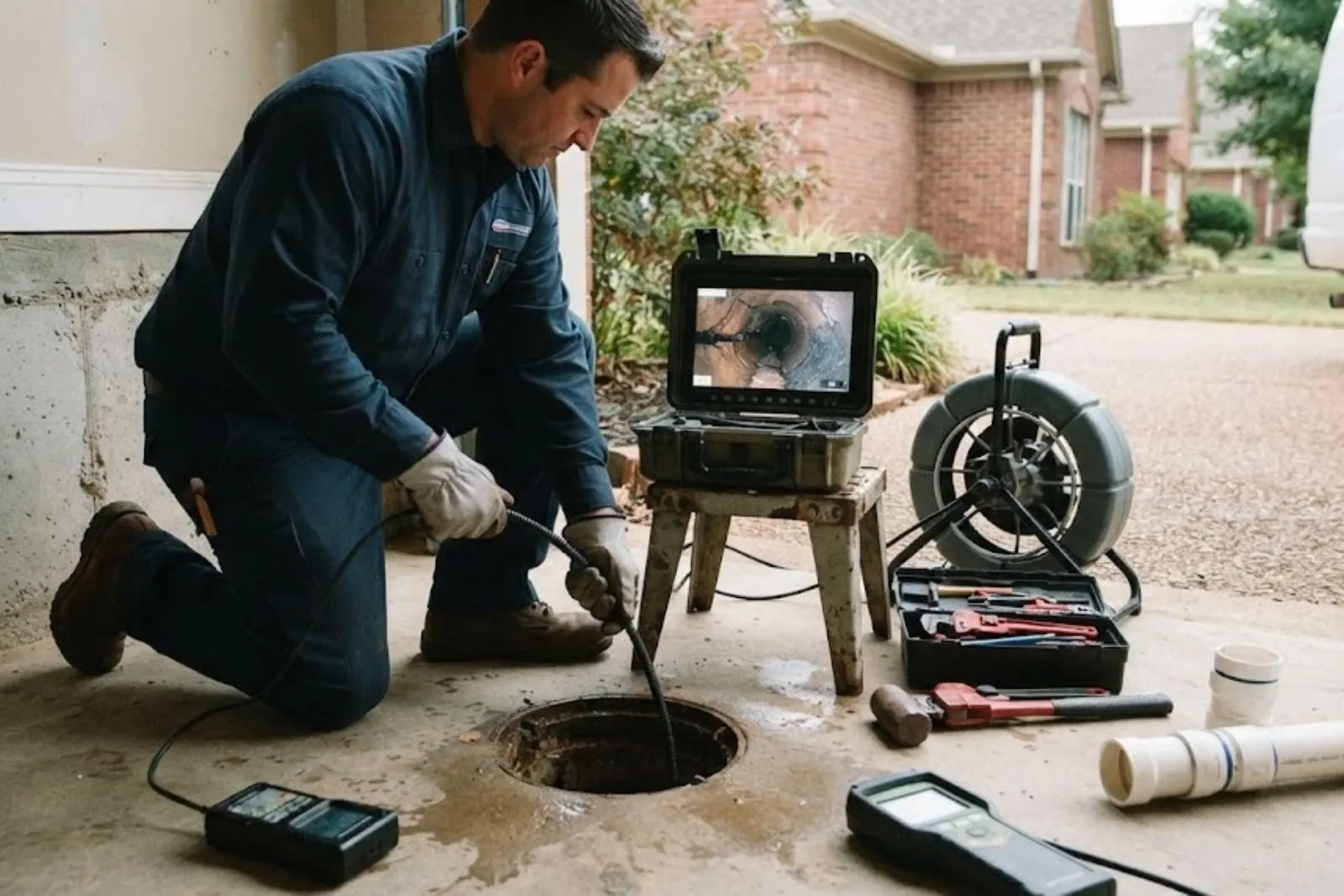
The two often get blurred on the phone. A caller says the sewer is clogged, but the stoppage may be the symptom of a damaged pipe that keeps catching paper. That is why a camera run belongs between the first cleaning and any repair quote.
| Situation | Usual approach | What pushes the cost up |
|---|---|---|
| One-time blockage, pipe in good shape | Cable or jet cleaning | Heavy roots, grease or a hard-to-reach cleanout |
| Clog plus camera inspection | Cleaning followed by video | Long runs, bends, poor access |
| Single damaged section | Spot repair or point dig | Depth, hardscape above the pipe, restoration |
| Pipe failing along its length | Lining or full replacement | Total length, pipe material, access points |
| Collapsed or heavily bellied pipe | Excavation and new pipe | Depth, trench conditions, number of utilities nearby |
The factors that actually set the price
Diagnosis
A camera run and a locator confirm where the damage is. That visit may be a separate line from the repair itself, but it keeps the work from being guesswork.
Length and depth of the damaged section
A short, shallow spot repair is a different scale of job from replacing a long run buried deeper. Depth affects digging time, shoring needs and the risk to other utilities.
Access
A pipe under open lawn is easier than one under a driveway, patio, sidewalk, landscaping or a finished basement slab. Restoring what had to be opened can cost as much as the pipe work.
Pipe material and method
Replacing with new pipe, relining the old one, or repairing a joint each carry different material and labor needs. Cast iron, clay and plastic lines each behave differently when cut.
Permits, mark-outs and inspection
Digging requires a Blue Stakes request first, and some jobs need a permit and inspection. Both add steps and sometimes waiting time.
Insurance matters here: standard homeowners policies often exclude sewer backup and do not cover wear or root damage in a lateral, so check your policy, and ask about any sewer or water-backup endorsement. For a real number on your line, call us for a camera inspection and a written price before any work begins.
Want a price based on what the pipe really looks like?
Call the 24/7 line. We will explain whether cleaning, a camera visit or a repair assessment makes the most sense, and give a clear price before work starts.
What Riverton homeowners should know
Jordan Basin Improvement District (JBID), formerly South Valley Sewer District, maintains the sewer main. The private line from your house to the main is the homeowner's responsibility, so a repair on that lateral is typically yours to pay for. JBID's cleanout test helps sort it out: standing water in the cleanout suggests a blockage between the house and the main, and the district's number is (801) 571-1166.
JBID also says the homeowner pays for backup damage unless the district knew of a system problem and failed to fix it in a reasonable time. Standard homeowners policies often exclude sewer backup. Roots, grease and flushed objects are common causes, and clay pipes from before the 1980s are prone to roots.
Sources: Jordan Basin Improvement District (JBID) sewer service guidance and history pages
How to judge a sewer repair quote
A good estimate names what is being done, where, and how. It should refer to video evidence of the defect, not just a symptom. If a quote arrives without a camera inspection, ask what the plan is based on.
Compare scope, not just totals. One bid might include restoring the lawn and hauling spoils, while another leaves the yard torn up. The cheaper bid on paper may become the more expensive one in practice.
- Ask to see the footage.The plumber should show you the defect on the recording and explain its length.
- Ask what happens if the pipe is worse than expected.Find out how a change in scope would be priced and approved before it happens.
- Ask about restoration.Who is responsible for lawn, concrete, landscaping or flooring once the work is done.
- Confirm licensing.You can verify any plumber through the Utah Division of Professional Licensing license lookup.
Spot repair, lining or replacement: a decision frame
Favors a limited repair
- Camera shows one damaged joint or short section
- The rest of the pipe wall looks sound
- The clog came from one root intrusion that has been cut out
- Symptoms are recent and the line has not been repeatedly blocked
Favors a larger repair
- Damage repeats along the length of the pipe
- The pipe has a sag that holds waste and paper
- Roots return quickly after cleaning
- The line is crumbling or has collapsed
Limited repair costs less now. A line that is failing everywhere can end up costing more in total when you pay for the same spot to be dug twice. This is the call that a camera recording lets you make with evidence. A full sewer line repair makes sense when the footage shows the pipe is wearing out along its length.
If sewage is already backing up
Keep people and pets out of the affected area. Run no water, since every drop goes to the same blocked line. Do not use toilets, sinks, showers, dishwashers or the washing machine until the line is cleared.
Call the 24/7 line. A backup in a low drain, tub or basement floor drain is a full blockage, and it is the most urgent version of this problem. Photograph the damage for your records before cleanup.
If you also have neighbors on the same street with backed-up drains, tell the sewer district, because the blockage may sit in the main. We work in Riverton and also dispatch to Bluffdale and Herriman.
Sewer line cost questions
Cleaning restores flow in a pipe that works. Repair means the pipe is damaged, which can involve excavation, new pipe and restoring whatever was above it. Those are separate jobs with different labor and materials.
Yes. If roots, a belly or a cracked joint keep catching waste, cleaning only buys time. A camera inspection after the first cleaning shows whether the pipe is the real problem.
According to the Jordan Basin Improvement District, the district maintains the main and the private line from the home to the main is the homeowner's. The cleanout test shows which side a blockage is on.
Standard policies often exclude it, and wear or root damage in a lateral is commonly not covered either. Ask your insurer about a sewer or water-backup endorsement and read your policy before you need it.
Yes, for any digging. Blue Stakes asks for notice before excavation, counted in business days, and the utilities mark their lines. A plumber doing excavation should handle the request.
Keep grease and flushed objects out of the line, and have the line scoped if you have repeat clogs or large trees near the pipe. Catching a defect early often keeps a repair small.