
Four sources of basement water, and why the material depends on which one you have
Basement water usually comes from one of four places: groundwater pressing on the foundation, surface water running toward the house, a plumbing leak, or condensation on cold surfaces. A material that suits one will do little for the others.
A common mistake is to seal a wall that is wet because of a pipe or a gutter. The sealer holds for a while, then the water finds another way in. Diagnosis comes first, and it can be as simple as looking at when the water appears.
| Clue | Likely source | Where to look |
|---|---|---|
| Wet only after rain or snowmelt | Surface water or groundwater | Grading, downspouts, window wells, floor-wall joint |
| Wet all the time, even in dry weeks | Plumbing leak | Water meter test, supply lines, drain lines, water heater |
| Damp patches on cold walls in humid weather | Condensation | Cold pipes, uninsulated walls, poor ventilation |
| Water rising through the floor slab edge | Groundwater pressure | Floor-wall joint, cracks, sump pit |
| Wet near one fixture or wall only | Pipe or fixture | Supply and drain lines behind that wall |
You can run a simple meter test yourself. Shut off every water use in the house, then watch the water meter dial. If it moves, water is going somewhere. A plumber can locate the leak with leak detection tools before any waterproofing money is spent.
What each waterproofing material actually does
Masonry sealers and coatings
Brushed or rolled onto interior walls to slow moisture vapor and light dampness. They do not stop water under pressure, and a heavy coating over active leaks can peel.
Hydraulic cement
A fast-setting cement used to plug small cracks and holes. Useful for a defined crack, but it can fail if the wall keeps moving.
Interior drain channel
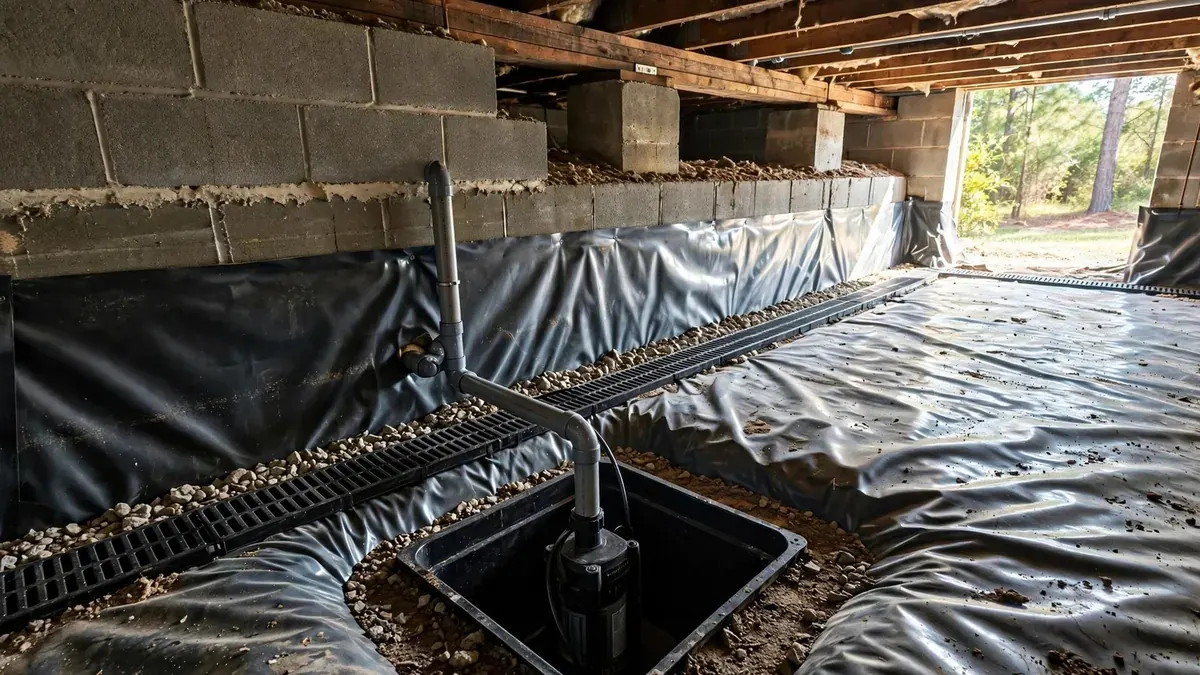
A channel along the floor edge collects water that enters at the wall-floor joint and sends it to a sump. It manages water, it does not keep it out.
Sump basin and pump
A pit in the floor collects water and a pump sends it outside. This is where our sump pump service comes in, including battery backup and discharge routing.
Wall drainage panels
Dimpled sheets on the wall let moisture drain down to the channel instead of soaking the wall. They are paired with a drain system and a floor-level exit.
Window well drains and covers
Wells that fill with water can leak through the window. A drain at the bottom and a cover keep water from collecting against the glass.
Water in the basement and not sure why?
Call the 24/7 line. A licensed plumber can check for leaks, look at your sump setup, and explain the clear price before work starts.
What Riverton homeowners should know
The Utah Geological Survey's Special Study 152 covers the Copperton quadrangle, which includes parts of Riverton, South Jordan, West Jordan and Herriman. It maps shallow groundwater, which the study says can flood basements. It also maps collapsible soils that lose volume when wet, and expansive soils that swell when wet and shrink when dry, which can crack foundations and damage underground utilities.
The study does not say which Riverton blocks fall in the mapped part. So check your own property, watch for seasonal rises in water at the floor edge, and ask a plumber to look at your sump and drains. Do not assume your home is affected, and do not assume it is not.
Sources: Utah Geological Survey Special Study 152, Geologic Hazards of the Copperton Quadrangle
What a plumber handles and what needs someone else
Plumber scope
- Finding and fixing leaking supply and drain lines
- Installing and servicing sump pumps and discharge piping
- Checking sewer backups and floor drains
- Moving water from basin to a legal discharge point, with local rules confirmed
- Diagnosing whether the water is plumbing or seepage
Other trades
- Foundation crack repair and structural work
- Exterior excavation and membranes on foundation walls
- Regrading the yard and fixing gutters
- Concrete patching beyond small cracks
- Anything that changes the structure of the house
We say this plainly because a waterproofing quote that bundles everything under one price can hide what is plumbing and what is not. Our basement waterproofing service stays within plumbing scope, and we will tell you when the fix is outside it.
A decision path from symptom to material
Rule out plumbing first
Run the meter test and check the water heater, supply lines and fixture drains. A plumbing leak ends the waterproofing question.
Check the outside
Look at downspouts, gutters, grading and window wells. Moving water away from the house costs less than managing it inside.
Identify seepage versus pressure
Dampness that dries between rains calls for a coating or wall panel. Pooling water at the floor edge calls for a drain channel and sump.
Size the sump to the problem
A basin and pump should fit the volume of water you see, with a backup for power outages.
Confirm the discharge
Ask the building department about discharge rules before water goes to the yard or street.
Five ways waterproofing money gets wasted
- Painting over an active leak.The coating blisters and the wall stays wet. Fix the source first.
- Skipping the backup.A sump pump fails during a storm power outage. A battery backup or alarm helps.
- Piping the discharge too close to the house.Water that comes out near the foundation can return. Route it well away, after confirming the rules.
- Ignoring condensation.A dehumidifier and insulation on cold pipes may solve what a membrane never will.
- Buying a material before a diagnosis.The wrong product costs money and leaves the problem in place.
Water that seeps in is not always a basement problem. If you find standing water around a floor drain, a toilet base, or a washing machine, read about leak detection first, because those are plumbing symptoms.
For homes west and east of Riverton
Riverton is our base, and we also dispatch to Herriman on our west side and Draper to the east. Ground conditions change from street to street, and Draper's own geotechnical standards require testing for groundwater depth and soil behavior on new work. That is a requirement to test, not a finding about any one yard, so a diagnosis at your house still comes first.
Basement water questions
It depends on the water source. A coating helps with light dampness. A drain channel and sump help with water at the floor edge. Neither fixes a plumbing leak, so find the source first.
They slow vapor and light dampness. They do not stop water under pressure, and they can blister over an active leak. Use them after the water source is fixed.
Water that appears in dry weather, near a fixture or along a pipe, suggests plumbing. Run the water meter test with everything off. If the dial moves, call a plumber to locate the leak.
A sump manages water that reaches the pit. It does not stop water entering the wall, and it needs a working discharge and a backup for outages. Our sump pump team can size it to the problem.
No. We handle plumbing scope: leaks, sump systems, drains and discharge. Foundation cracks and exterior membranes belong to other trades, and we will tell you when that is the answer.
The Utah Geological Survey maps shallow groundwater in the part of Riverton inside the Copperton quadrangle and says it can flood basements. Which blocks are covered is not stated, so check your own property and watch the floor edge after storms and snowmelt.
Away from the foundation, and to a place the local rules allow. We do not assume the rules, so ask the Riverton building department before you route it.