
Pump failed and water is rising: do this first
Stay out of standing water
Water on a basement floor can reach outlets, appliances and the pump cord. If water is near electrical items, leave the area and shut off power from a dry location only.
Check the simple causes
Look for a tripped GFCI outlet, an unplugged cord and a float stuck against the pit wall. Reset or free them if you can do so without stepping in water.
Buy time
A wet vacuum or bucket brigade at the pit slows the rise. Lift stored items off the floor.
Note where it enters
Water bubbling up through the pit is groundwater. Water seeping along a wall may be a different leak. Tell us which you see.
Call the 24/7 line
We handle after-hours sump calls, and same-day service is offered when available.
If the water smells like sewage, it did not come from groundwater. Keep people and pets out, do not run any plumbing and call right away.
What is inside a sump system
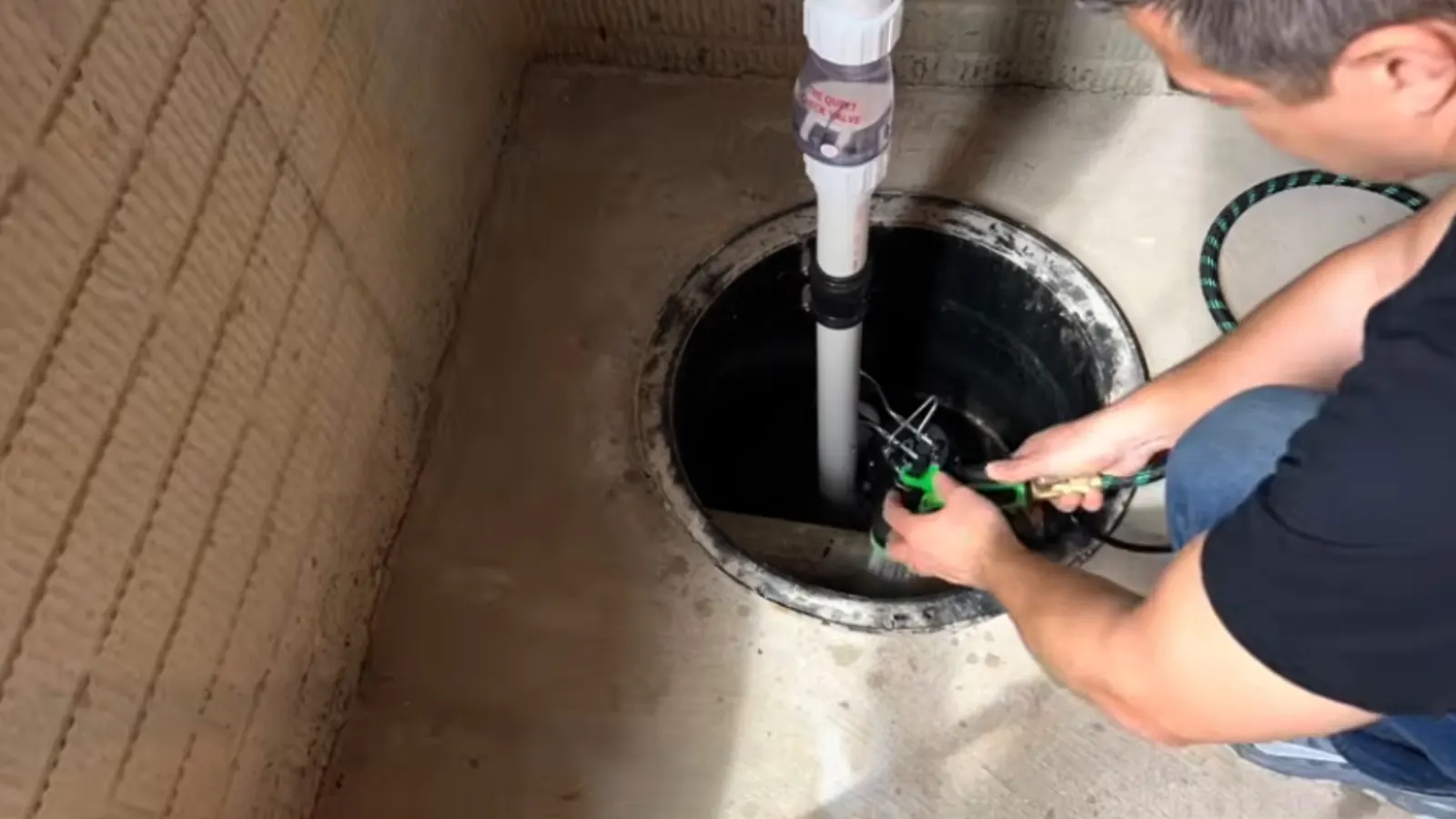
A sump system has four parts. The pit holds water and the pump moves it. A float switch tells the pump when to start. A discharge pipe with a check valve carries the water outside and stops it from falling back in.
| Type | Best for | Watch for |
|---|---|---|
| Submersible pump | Most finished basements, quiet and sealed | Debris jamming the float or impeller |
| Pedestal pump | Narrow pits, easy access to the motor | Louder, motor sits above water and can overheat |
| Battery backup unit | Power outages during storms | Battery age and charger fault |
| Sewage ejector pump | Basement bathrooms below the sewer line | Sealed lid, odors, solid handling |
| Water-powered backup | Homes where battery size is limited | Requires adequate supply pressure |
Ejector pumps handle toilet and sink waste from a basement bathroom, so a failure is a sewage event. Treat any backup from that pit as contaminated water.
Why groundwater matters in Riverton
The Utah Geological Survey's Special Study 152 maps shallow groundwater in the Copperton quadrangle, which includes parts of Riverton, South Jordan, West Jordan and Herriman. The study says shallow groundwater can flood basements and other underground spaces. It does not say which Riverton blocks fall in the mapped part.
The practical lesson is simple. Do not assume your basement is safe because it has never flooded. Groundwater can rise with the season, so a pit that sat dry all winter may fill in spring. If you own a home with a basement or sunken lower level, check the pump before the wet months.
We do not claim that every Riverton basement needs a pump. We look at the pit, the water and the signs of past moisture, then tell you if a pump is warranted.
Sump pump not keeping up?
Call the 24/7 line and tell us what the pump does. We will say what to check while you wait and arrange a visit.
Diagnosing a pump that fails
Runs constantly
A stuck float, a failed check valve that lets water drain back, or a pit that cannot keep up with inflow.
Hums but does not pump
A jammed impeller or a failing motor. Debris or silt is often the culprit.
Will not start
No power, a tripped GFCI, a dead float switch or a burnt-out motor.
Starts and stops rapidly
A pit that is too small, a float set wrong or a check valve allowing backflow.
Loud rattle or vibration
A worn bearing or a loose discharge pipe. Both usually show up before total failure.
We pull the pump, test it, clean the pit and check the float and valve. If the pump is worn, replacement is usually more honest than another repair.
Installing a new pit or a backup pump
A new installation means breaking a section of slab, setting the pit liner, placing the pump and running a discharge pipe outside. The pipe should carry water away from the foundation, not toward the neighbor's yard or the street without a plan.
Discharge rules vary, so ask the Riverton building department what applies before you choose a route. If the work involves new plumbing lines, the city says a building permit is required for plumbing systems the code regulates.
- Battery backup.Storms that bring groundwater up often bring power outages too. A battery unit keeps the pit emptying when the main pump cannot.
- Alarm.A high-water alarm gives you warning before water reaches the floor.
- Cleaning.Pits collect silt and debris. A yearly check keeps the float free.
If water enters through cracks and window wells rather than a pit, a pump alone is not the answer. See basement waterproofing for how plumbers approach it. If you suspect a pipe rather than groundwater, read about leak detection.
What sump pump work costs
Replace or install
A swap needs no concrete work. A new pit means cutting the slab and setting a liner.
Pump type and capacity
Larger pumps and sewage ejectors cost more than basic submersibles.
Discharge route
Longer runs, buried lines or outside work add labor and materials.
Backup and alarms
Battery units and water alarms are separate equipment.
After-hours service
A flooding basement at night is handled differently from a scheduled install.
Many homeowners policies exclude water that comes up from the ground or backs up through drains unless an endorsement is added, so check your policy. Call the 24/7 line and we give you a clear price before work starts.
Rules and sources behind this page
Utah Geological Survey Special Study 152 says shallow groundwater can flood basements in mapped areas of the Copperton quadrangle, which includes parts of Riverton. According to the study, seasonally shallow groundwater can also cause problems outside mapped zones.
Discharge routing and any permit follow the building department's rules and the IPC. Utah Code 15A-2-103 adopts the 2024 International Plumbing Code (IPC) as the state plumbing code, effective July 1, 2026, with Utah amendments on top. Ask the Riverton building department about discharge before you route a pipe.
Sump pump questions
Yes. Our line runs 24/7. If your pit is overflowing, stay out of the water, shut off power from a dry spot and call right away. Same-day appointments are offered when available.
Maybe not. A heavy inflow, a stuck float or a failed check valve can all cause constant running. We check the float and valve before replacing the pump.
The Utah Geological Survey's Special Study 152 maps it in parts of the area near Riverton, South Jordan, West Jordan and Herriman. It does not say which blocks are affected, so check your own basement history and ask us to look at the pit.
A sump pump moves groundwater out of a pit. An ejector pump lifts toilet and drain waste from a basement bathroom to the sewer line. The ejector pit is sealed and should never be opened casually.
If you lose power during storms and your basement is finished, a backup is worth considering. We explain which type fits the pit.
Away from the foundation and not into a neighbor's property. Ask the Riverton building department about discharge rules, and we plan the route with you.
Yes. We dispatch to Herriman and South Jordan from our Riverton base. For a pipe that has burst instead, see burst pipe repair.