Six signs a toilet is clogged or about to be
Most clogs give a warning. Catching the early signs lets you clear a partial blockage with a plunger before it becomes a flooded bathroom floor.
Slow, weak flush
The bowl empties lazily and the swirl is weak. Paper or waste is catching in the trap, the curved passage built into the toilet base.
Water rises, then drops slowly
The level climbs toward the rim after a flush and takes a long minute to settle. This is a partial blockage, and it often becomes a full one within a few uses.
Gurgling or bubbling
Air is being pushed back through the water seal because the drain is restricted. Gurgling that also shows up in a nearby sink or tub points past the toilet.
Bowl will not refill normally
The level sits low or oddly high after flushing. Low can mean a partial siphon problem, while high means the outlet is restricted.
Sewer smell near the toilet
A dry or disturbed water seal lets drain air into the room. Repeated smells plus slow flushing suggest a restricted line, not just a dry trap.
More than one drain acting up
If the tub gurgles when you flush or the shower pools around your ankles, the clog is likely in a shared line. A plunger will not reach it.
Which sign points where: a quick decision table
Use the pattern below to decide where to start. The question to answer first is simple: is this one toilet, or is this the house?
| What you see | Likely location | Sensible first move |
|---|---|---|
| One toilet slow, others fine | Inside that toilet or its short branch | Flange plunger, then a closet auger if needed |
| Toilet and tub both gurgle | Shared branch drain | Stop using water and call for cabling |
| Every drain slow, lowest fixture backs up first | Main house drain or lateral | Check the cleanout, stop all water use |
| Toilet clogs repeatedly, clears, then clogs again | Partial blockage, roots or scale in the line | Camera inspection to find the cause |
| Bowl overflows when the washer drains | Main line restriction | Call before running more water |
What Riverton homeowners should know
Riverton's sewer main belongs to Jordan Basin Improvement District, the agency that used to be South Valley Sewer District. It asks residents not to flush diapers or other disposable hygiene products. If the clog is in the pipe, not the toilet, that guidance is worth taking seriously because those items are a common reason lines stall.
The district also describes a simple check you can do at your cleanout, the capped pipe access on your private sewer line. Standing water at the cleanout suggests a blockage between your house and the main, and the district asks you to call it at (801) 571-1166. No water there suggests the problem is in your house plumbing, which is when a plumber should look at the toilet and branch drains.
Sources: Jordan Basin Improvement District customer information page on sewer responsibility and flushing
How to clear a simple toilet clog without making it worse
If the water level is below the rim and only this toilet is affected, a plunger is a fair first try. Use a flange plunger, the kind with a rubber sleeve that folds out of the cup, because a flat sink plunger will not seal in the bowl.
Stop the refill
Lift the tank lid and push the flapper down, or turn the supply valve behind the toilet clockwise. This keeps the bowl from refilling and overflowing while you work.
Set the seal
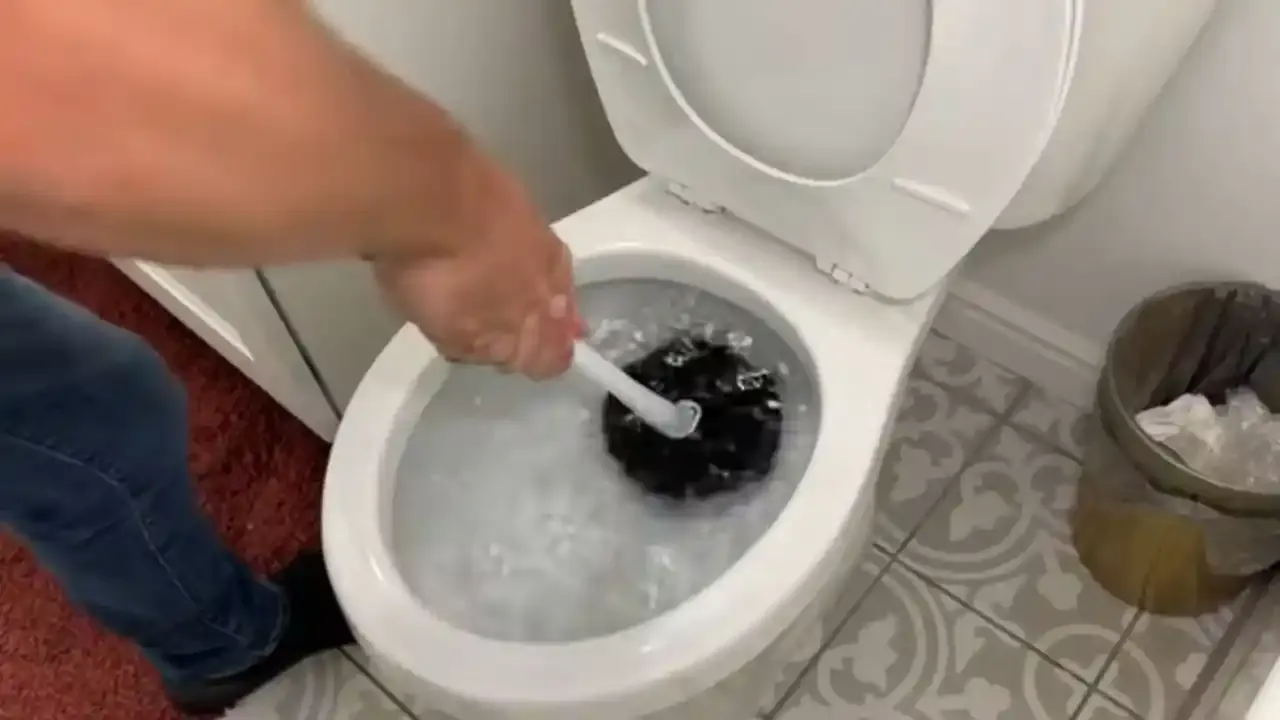
Put the plunger over the outlet at the bottom of the bowl and press down slowly once to push the air out. Then pump firmly and keep the cup under water.
Pull on the last stroke
The suction on the pull stroke is what dislodges most clogs. Do 10 to 15 steady strokes, then check whether the bowl drains.
Test with a small flush
Pour a bucket of water into the bowl from waist height instead of flushing. If it drains fast, the clog is gone. If it climbs, stop.
Try a closet auger once
A closet auger is a short cable with a curved guard that protects the porcelain. Feed it gently and crank. Forcing it can scratch the bowl or push the clog deeper.
Skip the bottle of drain chemicals. They sit in a bowl that will not drain, burn skin if the plunger splashes, and make the job unpleasant for whoever comes next.
Plunger not working?
If the bowl keeps rising or other drains are involved, stop and call the 24/7 line. We will find where the blockage actually sits.
When to stop plunging and call a plumber
Plunging past the point of reason is how clogs turn into messes. Three things should end the DIY attempt: water that rises toward the rim when you flush, a gurgle in another fixture, and a toilet that clogs again within days of clearing.
If water is overflowing, shut the supply valve behind the toilet and keep everyone out of the wet area. If the water is dirty, treat it as sewage: keep children and pets away, do not run any other water in the house, and call the 24/7 line. A toilet repair visit covers cases where the problem is the toilet itself, such as a cracked outlet or a loose flange.
Toilet problem or line problem? What a plumber checks
Points to the toilet
- Only one toilet is slow or backing up.
- The tub and sink next to it drain normally.
- A closet auger pulls out paper, a toy or a wad of material.
- The toilet rocks slightly or leaks at the base, suggesting a flange issue.
Points to the drain line
- Several fixtures gurgle or drain slowly at once.
- The lowest drain in the house backs up first.
- The problem returns after every clearing.
- A camera shows roots, scale, grease or a bellied pipe.
When the cause is in the line, a drain cleaning visit with a cable machine usually restores flow. If the same line keeps clogging, a camera shows why before anyone recommends a bigger repair. We also dispatch to Draper and South Jordan for the same kinds of calls.
Common reasons toilets clog, and how to stop repeats
Most toilet clogs come from using the toilet as a trash can. Paper towels, cotton balls, cleaning cloths, diapers and other hygiene products do not break down the way toilet paper does, so they collect in the trap and the pipe behind it.
Low-flow toilets leave less water to push waste along, so a little extra paper can be enough to stall a flush. Use less paper per flush, flush twice for large loads, and keep a plunger where everyone can find it. Kids' toys and small items are another regular culprit, which is why a closet auger often comes back with something that was never supposed to be in the bowl.
Repeat clogs in an otherwise healthy toilet deserve a look at the line. A partial blockage downstream, such as roots, scale or a sag in the pipe, makes every flush a little harder until one finally stops.
Rules and sources behind this page
The flushing guidance comes from Jordan Basin Improvement District, which asks customers not to flush diapers or other disposable hygiene products. Its cleanout test is the guideline for telling a fixture clog from a main line blockage.
Drain repairs follow the plumbing code Utah adopts. Utah Code 15A-2-103 adopts the 2024 International Plumbing Code (IPC) as the state plumbing code, effective July 1, 2026, with Utah amendments on top.
Clogged toilet questions people ask
It is serious if water rises toward the rim, if other drains gurgle, or if the toilet clogs again soon after clearing. Those signs point to a line problem. A single slow toilet that clears with a plunger is usually a simple clog.
No. Each flush adds water to a bowl that cannot drain, and the next one can overflow onto the floor. Shut the supply valve behind the toilet and try the plunger or an auger.
Air is moving through a drain that is partly blocked, so water from one fixture disturbs the seal in another. This often means a restriction in a shared branch or the main line, and it is worth a visit from a plumber with a cable machine.
It becomes one when the bowl overflows, sewage backs up into tubs or floor drains, or there is only one bathroom and it is unusable. In those cases call the 24/7 line, stop using water, and keep the area clear until we arrive.
They rarely clear a true blockage and they leave caustic liquid sitting in the bowl. That makes plunging and augering riskier for you and for the plumber. Mechanical clearing is the safer choice.
Yes. If you see standing water at your cleanout, the blockage is likely between your house and the main, which the district handles on its side. If the cleanout is dry, the trouble is in your own plumbing, and a drain cleaning call can locate it.