
The kitchen drain: grease is the real enemy
Hot grease looks like a liquid going down the drain. A few feet later it cools, sticks to the pipe wall, and starts catching coffee grounds, rice and food scraps. Over months it forms a hard, waxy lining that narrows the pipe.
Wipe greasy pans with a paper towel and put the towel in the trash. Pour cooled cooking fat into a can or jar, and throw that away. A garbage disposal grinds food, but it does not stop grease from coating the line beyond it.
- Scrape plates into the trashSolid scraps belong in the bin, not in the sink basket.
- Skip the starchy and stringy itemsPasta, rice, potato peels, celery and corn husks swell or tangle in the trap and the disposal.
- Keep coffee grounds outGrounds settle in the bottom of horizontal pipes and pack together.
- Run cold water with the disposalCold water keeps fats firmer so the blades chop them rather than smearing them.
- Flush with hot water after the dishesA good flush of hot tap water moves loose residue past the trap before it settles.
Bathroom sinks, tubs and toilets clog for different reasons
| Fixture | What builds up | Habit that helps |
|---|---|---|
| Shower and tub drain | Hair wrapped in soap scum | Fit a mesh catcher and empty it weekly |
| Bathroom sink | Toothpaste, hair and soap film around the stopper | Pull the stopper monthly and clean it |
| Toilet | Too much paper or flushed items that do not break down | Flush only toilet paper and waste |
| Floor drain in a basement bathroom | Dried-out trap and lint | Pour water into it every few weeks |
Toilets are built for human waste and toilet paper. Diapers, paper towels, cotton balls, dental floss and the so-called flushable products all tend to snag in a bend and build a plug. If it did not come out of your body or off the roll, put it in a wastebasket.
Hair is the leading cause of slow showers. A cheap catcher over the drain stops it before it forms a mat that clings to the pipe wall.
Laundry, utility sinks and floor drains
A washing machine sends a lot of water, lint and detergent residue into a standpipe in a short time. A lint trap on the discharge hose catches fibers before they reach the line. Clean it every few loads, because a clogged trap or crushed hose can back water out of the standpipe.
Utility sinks catch paint, plaster and grit that should never go down a drain. Wash brushes in a bucket, let solids settle, and dispose of the sludge in the trash. Plaster and joint compound harden inside a trap like cement.
Floor drains in garages and basements often sit unused for months. Their traps dry out and let sewer gas rise, and debris collects around the grate. Pour a pitcher of water into each one every few weeks to refill the trap.
What Riverton homeowners should know
Riverton's sewer provider, Jordan Basin Improvement District (formerly South Valley Sewer District), says not to pour cooking grease down drains, even if you have a garbage disposal. Put it in the trash instead. The district also asks residents not to flush diapers or other disposable hygiene products. Roots, grease and flushed objects are among the common causes of sewer problems.
The district maintains the main, and the private line from your house to the main is yours. Its cleanout test is simple: if you open the cleanout and see standing water, a blockage is likely between the house and the main, so call the district at (801) 571-1166. If the cleanout is dry, the problem is probably in your home plumbing.
Sources: Jordan Basin Improvement District (JBID) sewer service guidance
What to do and what not to do with a slow drain
- Do not pour chemical openers in a standing drain.They sit in the pipe, can damage fixtures and are dangerous if a plumber later opens the line.
- Do not mix cleaners.Combining products can release harmful fumes, so use one product at a time, in a ventilated room.
- Do use a plunger or a hand auger first.Both are safe for a fixture clog and tell you whether the blockage is near the drain.
- Call if several drains slow at once.That pattern points to the main line, and a plumber with a camera is the safe next step.
Slow drains in more than one room?
That usually points past a single fixture. Call the 24/7 line and describe which drains are slow, and we will tell you whether the main line needs a look.
A simple maintenance schedule that actually gets done
| How often | Task | Why it matters |
|---|---|---|
| Weekly | Empty shower hair catchers and clear the kitchen sink basket | Stops hair and food from compacting in the trap |
| Monthly | Pull and clean bathroom sink stoppers, flush kitchen drain with hot water | Clears soap film and light grease before it hardens |
| Every few weeks | Pour water into rarely used floor drains and guest-bath fixtures | Keeps traps full and blocks sewer gas |
| Twice a year | Inspect the lint trap, supply hoses and visible traps under sinks | Catches wear and slow leaks early |
| Once a year | Open the sewer cleanout cap, look and listen, then replace it | Confirms there is no standing water in the lateral |
Skip the bottles of caustic drain opener. They can sit in a stopped pipe and eat at the fixture and the joints, and they leave a hazard for the plumber who has to open the line. A plunger and a small hand auger, used gently, handle most minor clogs.
Plunger, cable or jet: matching the fix to the clog
Not every clog needs the heaviest tool. Match the method to the problem and you avoid both wasted effort and unneeded damage.
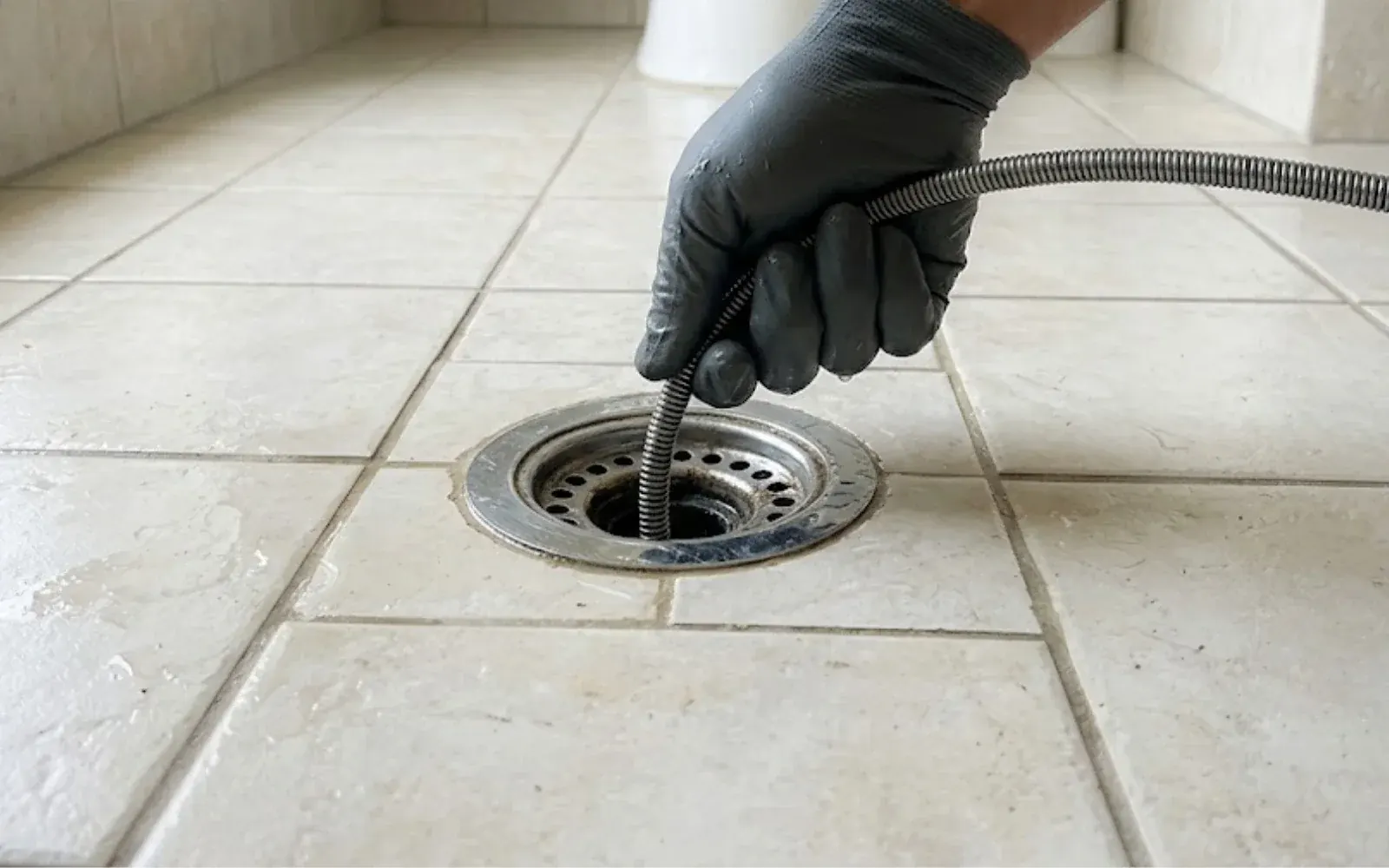
A plunger clears soft blockages at one fixture. A hand auger or a cable machine breaks through a plug in a branch line. When the pipe wall itself is coated with grease or scale, a cable only drills a hole through the middle, and the buildup comes back.
Cabling or snaking
- Opens a single blockage by boring through it
- Good for hair, paper and a localized obstruction
- Leaves the pipe wall coating in place
- Often the first and cheapest step for one stuck drain
Hydro jetting
- Scours the full pipe wall with high-pressure water
- Suits recurring clogs, grease coating and fine roots
- Should follow a camera look at the pipe's condition
- Not suited to a pipe that is cracked or collapsing
If you have cleared the same drain more than twice in a season, the pipe likely has a coating or a defect that more plunging will not fix. A professional drain cleaning visit, with a camera if needed, finds out why instead of treating the same symptom again.
When a clog is no longer a household problem
- Several fixtures back up at once.Water from the washer appearing in a tub, or a toilet that bubbles when the shower runs, points at the main line.
- Sewage rises in the lowest drain.That is a full blockage downstream. Keep people and pets away and run no water.
- Drains clear and then slow again within weeks.Coating, roots or a sag in the pipe is more likely than one stray obstruction.
- A gurgling sound after flushing.Air is pushing through a partly blocked line or a vent that is not working properly.
We also dispatch to Draper and Bluffdale, and the advice is the same there: a slow drain ignored for months is easier to deal with than a backup at midnight, so get an early camera look.
Rules and sources behind this page
The guidance on grease and flushing comes from Jordan Basin Improvement District, which asks customers not to pour cooking grease down drains and not to flush diapers or other disposable hygiene products.
Drain and trap work follows the plumbing code Utah adopts. Utah Code 15A-2-103 adopts the 2024 International Plumbing Code (IPC) as the state plumbing code, effective July 1, 2026, with Utah amendments on top.
Drain clog prevention questions
Grease and food residue that cool and stick to the pipe wall. A disposal does not prevent that. Scrape pans into the trash and put cooled fat in a container.
We advise against them. Caustic products can damage fixtures and sit in a blocked pipe, which is a hazard when a plumber opens the line. Try a plunger or a hand auger first, then call if that does not work.
Clean catchers and stoppers weekly or monthly, flush kitchen drains with hot water regularly, and check the cleanout once a year. A professional cleaning makes sense when a drain keeps slowing down after you have cleared it.
Hair and soap scum build up deeper in the line than you can reach. A cable machine clears the plug, and if it returns quickly, a camera look shows whether the pipe is coated or damaged.
A cable bores through a blockage. A jet scours the whole pipe wall with high-pressure water. Jetting suits recurring clogs, but it should follow a camera check so a fragile pipe is not stressed.
Many homes do, but locations vary. Look along an outside wall, in the yard near the foundation, or in a garage or basement. If you cannot find it, we can locate it during a visit, and the Jordan Basin Improvement District cleanout test tells you which side of the property line the clog is on.